3 Minutes Read
The modern Electric Vehicle is no longer just a mode of transport; it is a software platform on wheels. The global automotive OTA updates market is valued at USD 5.2 billion in 2025 and is forecast to reach USD 25 billion by 2035 at a CAGR of 17% (Future Market Insights, 2025). India is the second-fastest growing market globally at a CAGR of 21.3%, driven by connected vehicle adoption and 5G rollout.
Yet while cloud infrastructure and connectivity get the attention, the real determinant of OTA success sits inside the vehicle. Without ECU-side readiness, a firmware update is not a feature; it is a liability.
SOTA vs FOTA: Understanding What Is Actually Being Updated
OTA updates fall into two distinct categories that operate at different layers of the vehicle. SOTA (Software Over-the-Air) updates application-layer software: navigation maps, infotainment themes, and feature unlocks. These are relatively low-risk, as they do not touch the hardware control layer.
FOTA (Firmware Over-the-Air) is categorically different. It updates the firmware of safety-critical ECUs: the Battery Management System, Traction Inverter, Motor Controller, and braking systems.
In India, where 45 degree C summers stress battery chemistries, FOTA enables OEMs to push thermal management patches to thousands of vehicles overnight, without a single physical recall. Getting FOTA wrong can brick an ECU. Getting it right is a strategic competitive advantage.
The Anatomy of an OTA-Ready ECU
For FOTA to work safely and at scale, each ECU must be architecturally equipped with three core capabilities:
- Dual-Bank (A/B) Memory: The vehicle continues operating on the current firmware in Bank A while the new image is written to Bank B. The Flash Bootloader triggers the switchover only after a 100% successful integrity verification. If the update fails at any point, the ECU rolls back to Bank A automatically, eliminating the risk of a stranded vehicle mid-update.
- Hardware Security Module (HSM): Every incoming firmware package must carry a valid OEM digital signature. The HSM performs high-speed cryptographic verification using RSA or ECDSA, ensuring only authenticated firmware executes. Without HSM, an ECU is exposed to firmware injection attacks. With it, the entire update pipeline is cryptographically sealed.
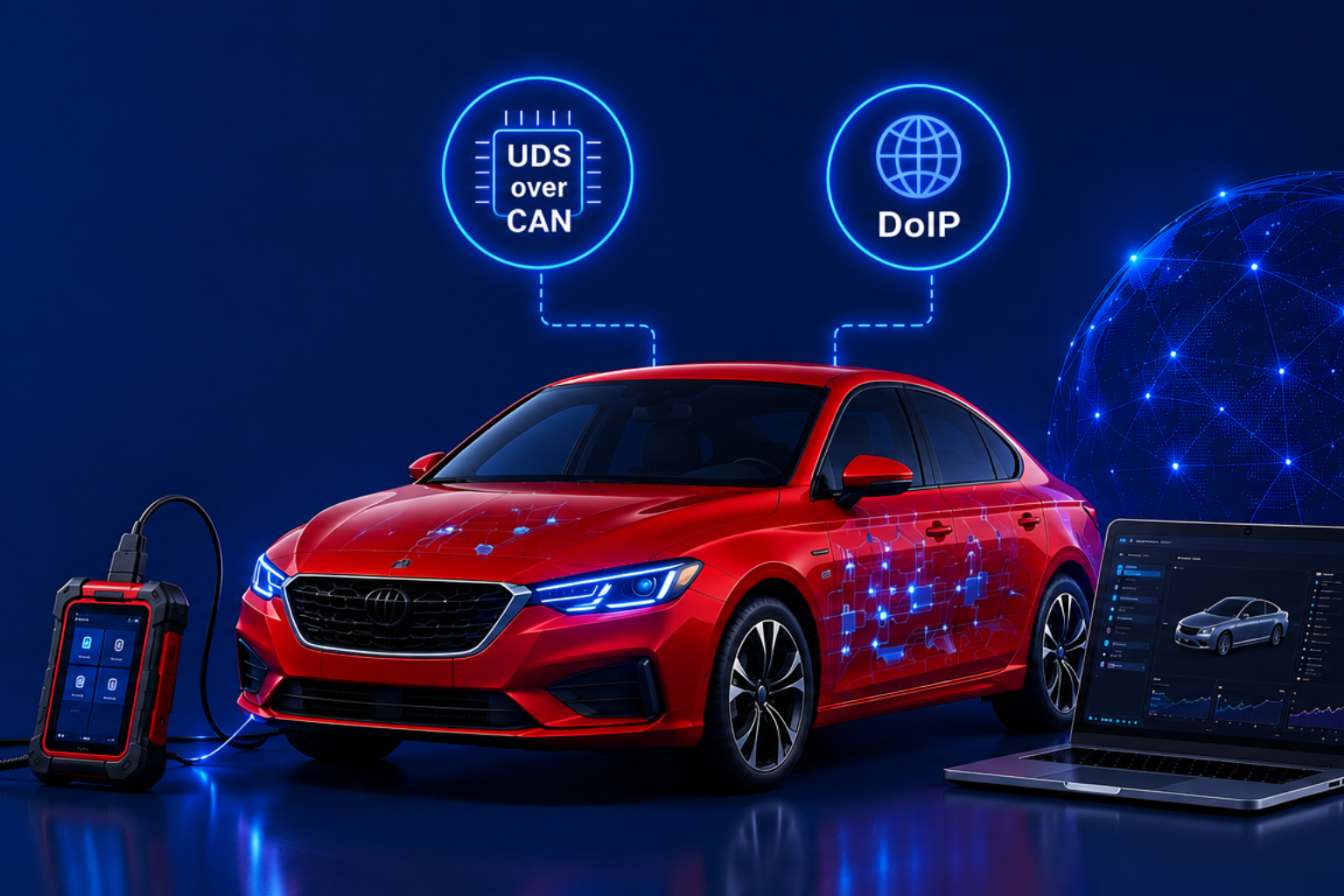
- UDS-Compliant Stack: The OTA master gateway communicates with each ECU using ISO 14229 (UDS). A production-grade UDS stack ensures structured, reliable data transfer during the FOTA process, including fault handling, session management, and transfer protocol control. For EVs, this also ensures that sensitive battery State-of-Health data and high-voltage subsystem parameters remain intact and correctly versioned through every firmware refresh.
ElectRay’s UDS Stack is a production-grade, AUTOSAR-compliant UDS solution that provides the standardised communication foundation Indian OEMs need for reliable FOTA execution across all ECU variants.
ElectRay’s Secure Flash Bootloader is a production-grade solution that orchestrates dual-bank switching, HSM-backed cryptographic verification, and rollback protection, providing the complete ECU-side execution layer that makes safe FOTA possible at scale.
OTA in the SDV Era: Centralized Compute and Zonal Architectures
As EV platforms transition toward zonal and centralized SDV architectures, OTA complexity increases significantly. OEMs must now manage High Performance Computing units (HPCs), synchronise firmware across powertrain, ADAS, and body domains, and maintain interdependent version integrity across the entire vehicle stack
Emerging practices are defining this shift include:
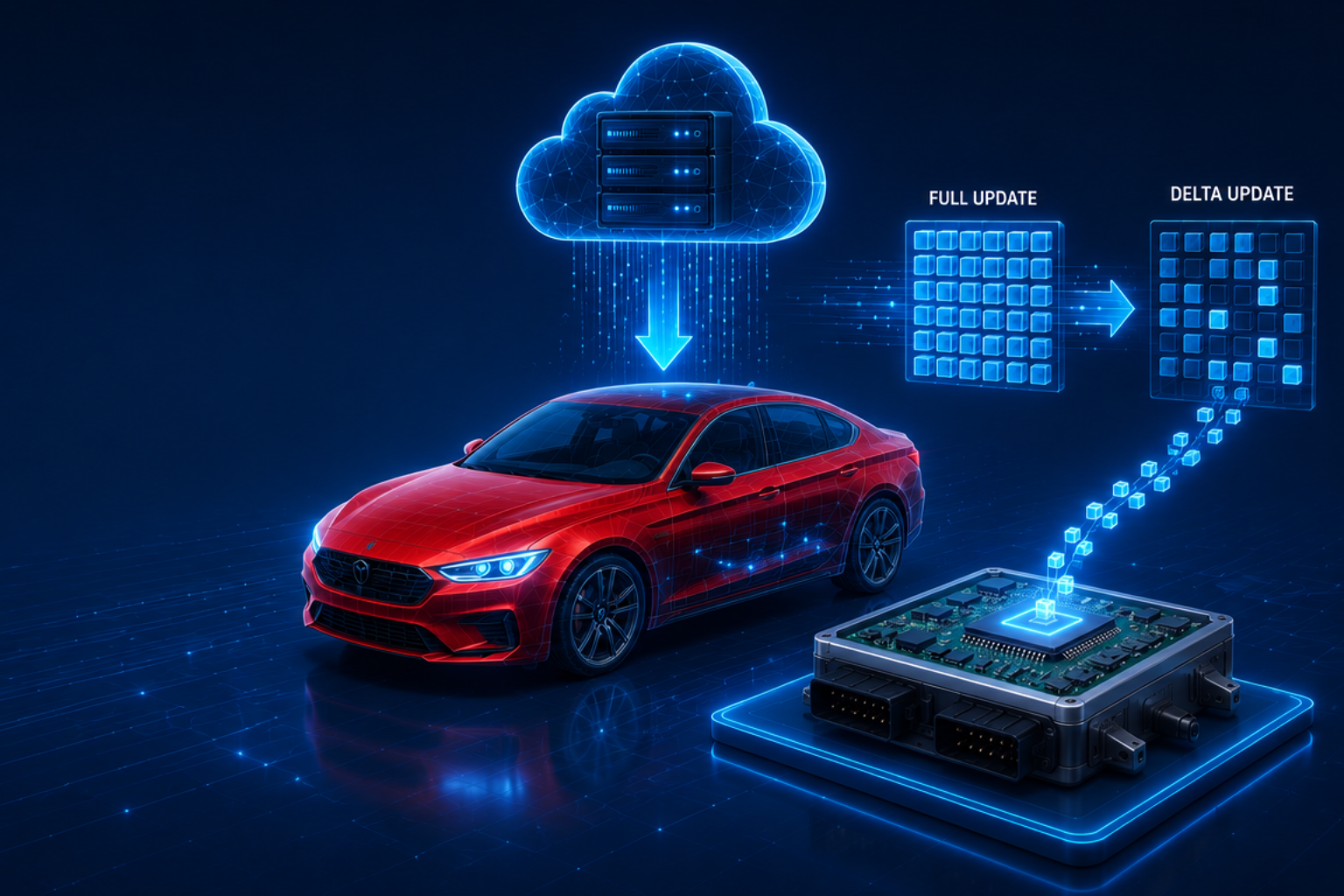
- Delta OTA updates: Transmitting only modified code segments to reduce bandwidth and update time
- Coordinated multi-ECU update sequencing: Ensuring dependent systems update in the correct order
- Intelligent scheduling: Selecting update windows based on battery state, connectivity strength, and usage patterns
In such architectures, the Flash Bootloader becomes a critical orchestrator of update integrity across domains, not just a single-ECU flashing tool.
The Regulatory Imperative: AIS-189, AIS-190 and ISO 24089
For Indian OEMs, ECU-side OTA readiness is becoming a legal requirement, not just an engineering best practice.
AIS-189 mandates a certified Cybersecurity Management System (CSMS) covering the full software lifecycle, including OTA update delivery and ECU reprogramming, with secure cryptographic signing and rollback protections mandatory by design.
AIS-190 specifically governs Software Update Management Systems (SUMS), requiring OEMs to implement secure OTA mechanisms, maintain version traceability for up to 10 years across all ECUs, and validate every update before deployment.
Simultaneously, ISO 24089 (Software Update Management) sets the international engineering standard for how firmware updates are designed, tested, and delivered. OEMs that cannot demonstrate compliance face being locked out of both Indian and export markets, as fleet buyers and government tenders increasingly screen for AIS-189/190 readiness before procurement.
Predictive Diagnostics: The Value Beyond the Update
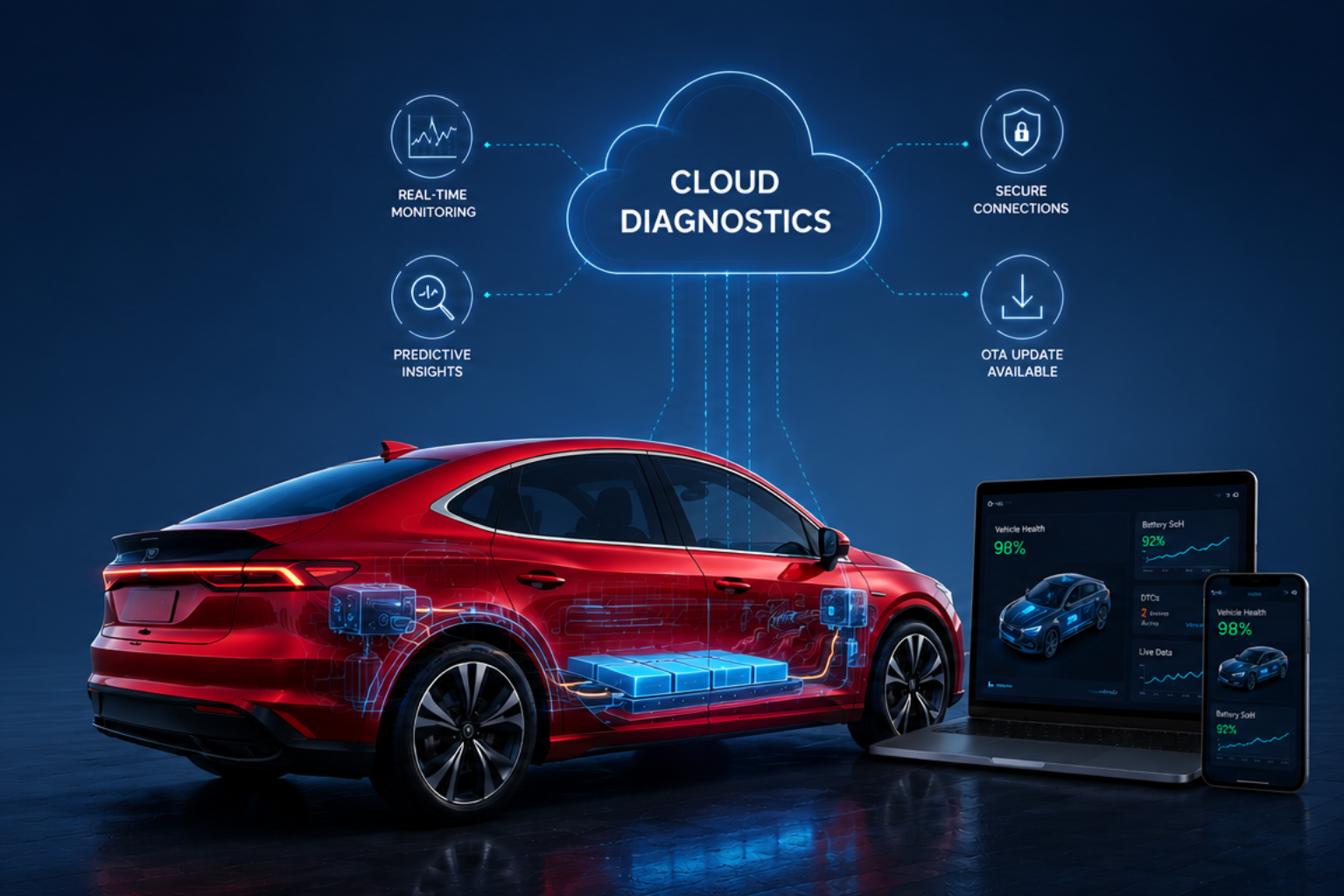
OTA readiness is not only about pushing updates; it is about pulling intelligence. ECUs equipped with robust diagnostic stacks continuously transmit health data to the cloud. If recurring fault patterns, battery impedance drift, or thermal anomalies are detected, the OEM can develop and deploy a targeted FOTA patch before the customer experiences a failure.
This shift from reactive recalls to proactive over-the-air resolution is one of the most significant operational advantages of a fully OTA-ready fleet. For India’s commercial EV operators managing thousands of three-wheelers and e-buses, this means fewer stranded vehicles, lower service costs, and direct protection of daily revenue.
ECU Readiness as Strategic Infrastructure
OTA and FOTA updates are the visible face of the EV revolution, but ECU-side readiness is the silent foundation that makes them safe and scalable.
As India’s EV fleet scales toward 5 million cumulative units and AIS-189/190 compliance deadlines approach, the gap between OEMs with production-grade embedded stacks and those without will become starkly commercial.
Secure flash bootloaders, UDS communication layers, and HSM-backed cryptographic pipelines are not back-office engineering choices.
They are the prerequisites for competing in a software-defined, regulation-governed, and trust-dependent EV market.