
AUTOSAR UDS Diagnostic Stack Overview
Modern ECUs demand reliable diagnostics, seamless integration, and zero surprises during vehicle validation and field deployment. However, many diagnostic implementations still struggle with integration delays, unstable flashing behaviour, and high debugging effort.
ElectRay's UDS Diagnostic Stack is designed to eliminate these risks.
Built on ISO 14229 Unified Diagnostic Services (UDS) and aligned with AUTOSAR R4.4.0 architecture, the stack provides a production-ready, integration-focused diagnostic framework for automotive and electric vehicle ECUs.
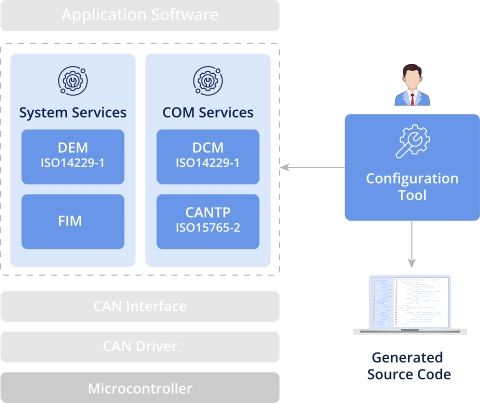
It enables OEMs and Tier-1 suppliers to implement standardized diagnostics, fault management, and ECU programming with significantly reduced development effort and faster time-to-market. The stack seamlessly integrates with both AUTOSAR and non-AUTOSAR environments, supporting key modules such as Diagnostic Communication Manager (DCM), Diagnostic Event Manager (DEM), and CAN Transport Protocol (CAN-TP).
Designed for real-world deployment, ElectRay's UDS Stack is MISRA-compliant, highly configurable, and optimized for performance across resource-constrained automotive microcontrollers, ensuring stable operation from development to production and into the field.
2+ Years in Production. Zero Field Issues Reported
ElectRay's UDS Diagnostic Stack has been running in production automotive programs since 2023, with zero field-reported issues impacting diagnostics or ECU communication.
This track record reflects a strong focus on robust implementation, deterministic behaviour, and real-world validation, enabling stable integration across multiple microcontrollers and vehicle platforms while minimizing debugging effort during validation and SOP.
Key Capabilities
Supported UDS Services
| Service | Description |
|---|---|
| 0x10 | Diagnostic Session Control |
| 0x11 | ECU Reset |
| 0x14 | Clear Diagnostic Information |
| 0x19 | Read DTC Information |
| 0x22 | Read Data by Identifier |
| 0x23 | Read Memory by Address |
| 0x27 | Security Access |
| 0x28 | Communication Control |
| 0x29 | Authentication |
| 0x2A | Read Data by Periodic Identifier |
| 0x2C | Dynamically Define Data Identifier |
| 0x2E | Write Data by Identifier |
| 0x2F | Input Output Control |
| Service | Description |
|---|---|
| 0x31 | Routine Control |
| 0x34 | Request Download |
| 0x35 | Request Upload |
| 0x36 | Transfer Data |
| 0x37 | Request Transfer Exit |
| 0x3D | Write Memory by Address |
| 0x3E | Tester Present |
| 0x83 | Access Timing Parameter |
| 0x84 | Secured Data Transmission |
| 0x85 | Control DTC Setting |
| 0x86 | Response On Event |
| 0x87 | Link Control |
ElectRay’s UDS vs Typical UDS Diagnostic Stacks
Selecting the right UDS diagnostic stack is critical for ECU reliability, software scalability, and long-term maintainability. The table below compares ElectRay’s eSAR.UDS stack with typical UDS implementations available in the market across architecture, integration effort, safety, and tooling support.
| USP Area | ElectRay UDS Stack | Typical UDS Stacks in Market |
|---|---|---|
| STANDARDS & ARCHITECTURE | ||
| AUTOSAR Compliance | AUTOSAR R4.4.0 and ISO 14229 compliant with MISRA-compliant code. Works across AUTOSAR and non-AUTOSAR ECUs with seamless reuse. | AUTOSAR or non-AUTOSAR implementations with limited reuse across platforms and programs. |
| Architecture & Memory Footprint | Modular DCM, DEM, FIM and CANTP. Lightweight and optimized for memory-constrained ECUs, scalable from 2W to PV. | Generic or heavy implementations with limited optimization for low-resource ECUs. |
| Platform Independence | ANSI C stack runs with or without RTOS across MCU families. No hardware lock-in. | Platform-dependent implementations with constraints on MCU, RTOS or toolchain. |
| EV / SDV Architecture Ready | Designed for EV and software-defined vehicle architectures with support for scalable, connected ECU systems. | Built for general automotive use; EV/SDV readiness depends on configuration and integration. |
| FLASHING & OTA | ||
| Flash Bootloader & OTA Support | Native integration with secure bootloader and FOTA. Seamless diagnostics and flashing workflow. | Requires separate modules or integration effort for flashing and OTA. |
| TOOLING & INTEGRATION | ||
| Configuration & Code Generator | Standalone CodeGen tool with ready-to-use templates. Faster setup with reduced integration errors. | Manual or Tool dependent configuration with higher setup effort. |
| ODX Support | Supports ODX file import. | No or requiring additional tooling or customization. |
| Integration Effort | Ships with a ready-to-run example application, user manual and test reports. | Higher effort due to tools, configuration or custom development. |
| QUALITY & SAFETY | ||
| Production Grade | Zero reported bugs since 2023, with over 2 years of field-proven performance in active production programs. | Maturity varies by product or project; validation effort required. |
| Functional Safety | Aligned with ISO 26262, supporting ASIL-oriented development and assessment. | Requires additional safety processes and system-level integration. |
| Cybersecurity | Supports secure diagnostics, HSM, secure boot and flashing. Aligned with ISO/SAE 21434 and AIS-189. | Baseline security available; advanced cybersecurity depends on integration and configuration. |
| Post-Sales Support & SLA | Dedicated technical support with defined SLA. Integration and customization supported through engineering services. | Support typically limited to defined scope; integration and customization offered as separate services. |
| ECOSYSTEM | ||
| Ecosystem Availability | Complete ecosystem including UDS, Bootloader and FOTA under one vendor. | Multiple tools, vendors or project-based integration required. |
UDS Configuration & Code Generation
Manual diagnostic configuration often leads to errors, delays, and increased debugging effort during ECU integration.
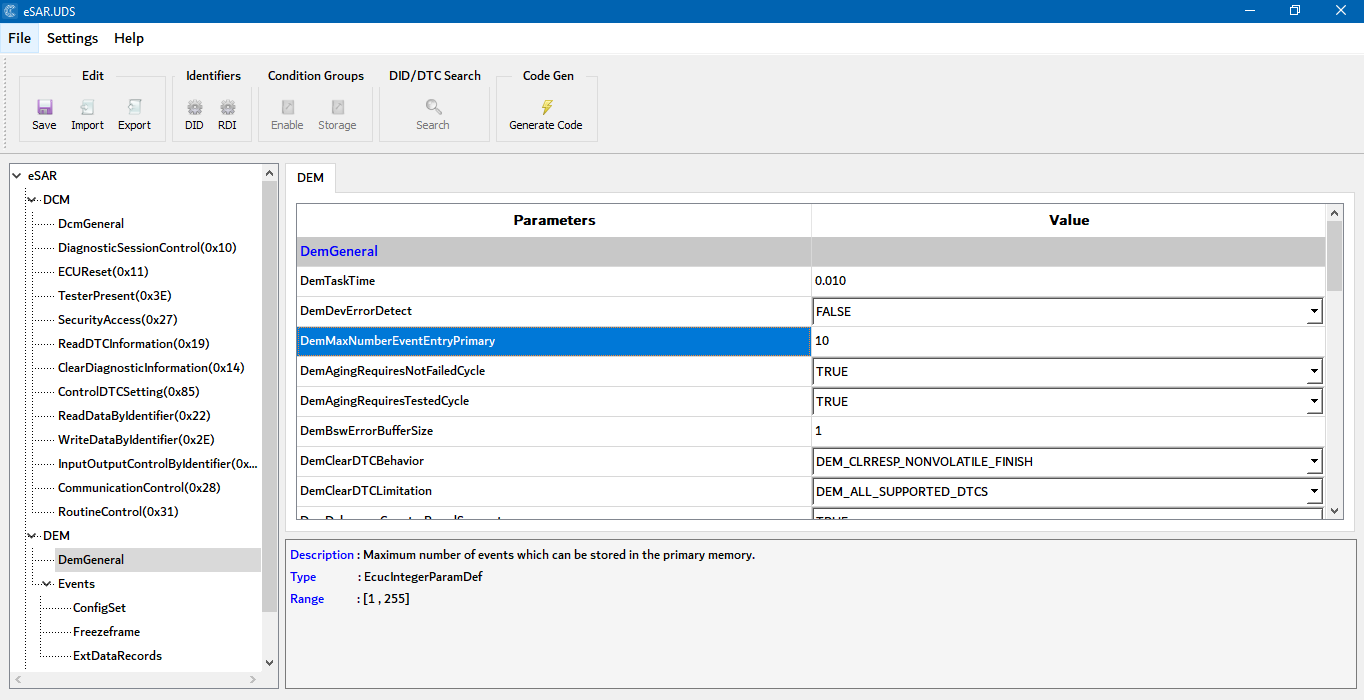
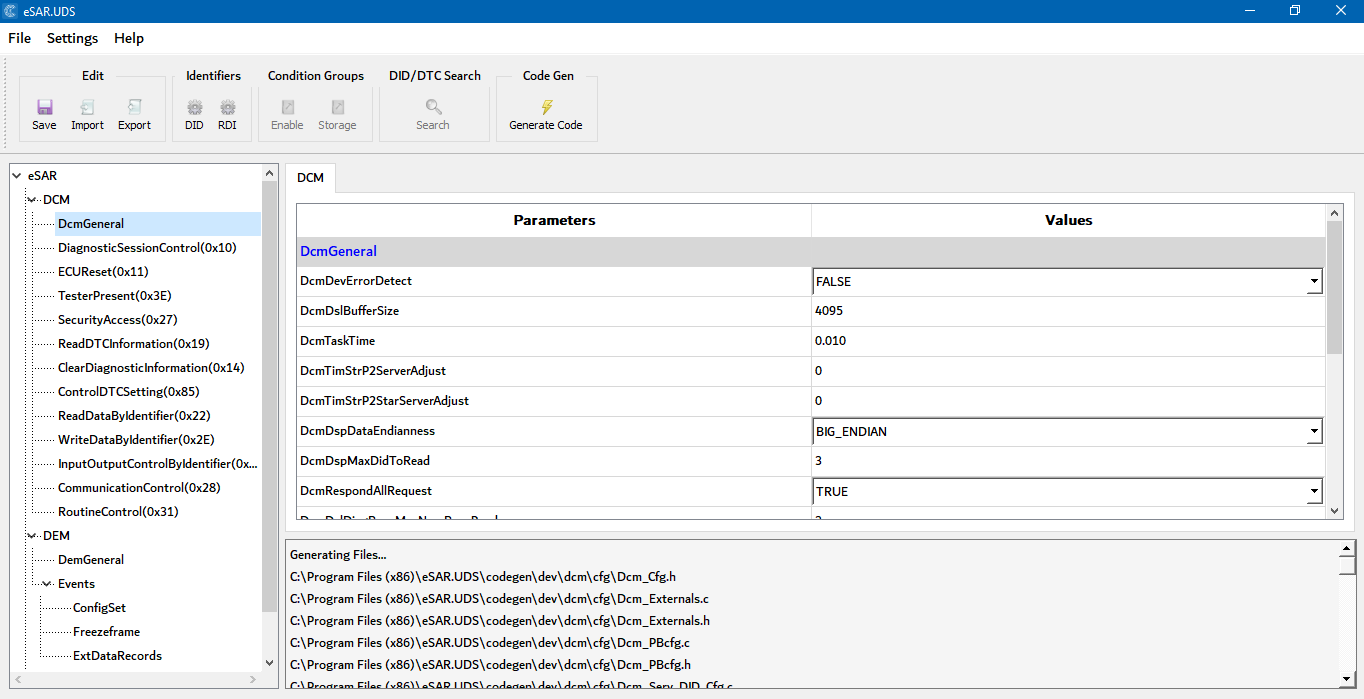
ElectRay’s UDS Configuration & Code Generation Tool provides a structured and intuitive environment to configure UDS diagnostics with confidence. Engineers can define sessions, security access, DIDs, routines, communication parameters, DTC’s and fault memory and with full control, ensuring consistent and accurate implementation across ECU platforms.
With automated generation of production-ready code, the tool reduces manual effort and accelerates ECU software bring-up. Built-in validation and scalable configuration management help minimize integration risks and support faster validation cycles.
Deployment & Support Ecosystem
Platform Support
- Microcontroller Platform-independent design
- Suitable for both AUTOSAR and non-AUTOSAR environments
Integration & Customization Support
- Stack configuration tailored to OEM-specific diagnostic requirements
- Support for seamless integration into existing ECU software architectures