4 Minutes Read
The automotive industry is rapidly moving toward software defined vehicles, where new features, bug fixes, and security patches are delivered through Over the Air updates.
But while OTA updates appear simple from the user’s perspective, just a notification and a quick installation, there is a complex, safety critical process happening inside the vehicle’s Electronic Control Units or ECUs.
The importance of OTA updates is also reflected in the rapid growth of the global automotive OTA market. The market was valued at approximately USD 5 to 6 billion in 2025 and is projected to grow to nearly USD 25 to 30 billion over the next decade, driven by software defined vehicles, connected platforms, and electric mobility adoption.
In India, the OTA market is still emerging but expanding rapidly, supported by increasing EV adoption and connected vehicle penetration, positioning it as one of the fastest growing regions for OTA enabled vehicle platforms.
At the center of this process is a critical component, the ECU Flash Bootloader.
In modern connected and electric vehicles, the bootloader is not just an update utility, it is a core control point that ensures software integrity, cybersecurity, and functional safety during every update cycle.
In this blog, we explain what happens inside an ECU during an OTA update and how the bootloader ensures the update is secure, reliable, and safe for the vehicle.
What is an OTA Update in Vehicles
An Over the Air update allows automotive manufacturers to remotely update vehicle software without requiring a service center visit.
OTA updates are commonly used for:
- Firmware updates for ECUs
- Security patches
- Feature enhancements
- Performance optimizations
- Bug fixes
These updates are delivered through cellular connectivity, Wi Fi, or telematics systems and installed directly on the vehicle’s ECUs.
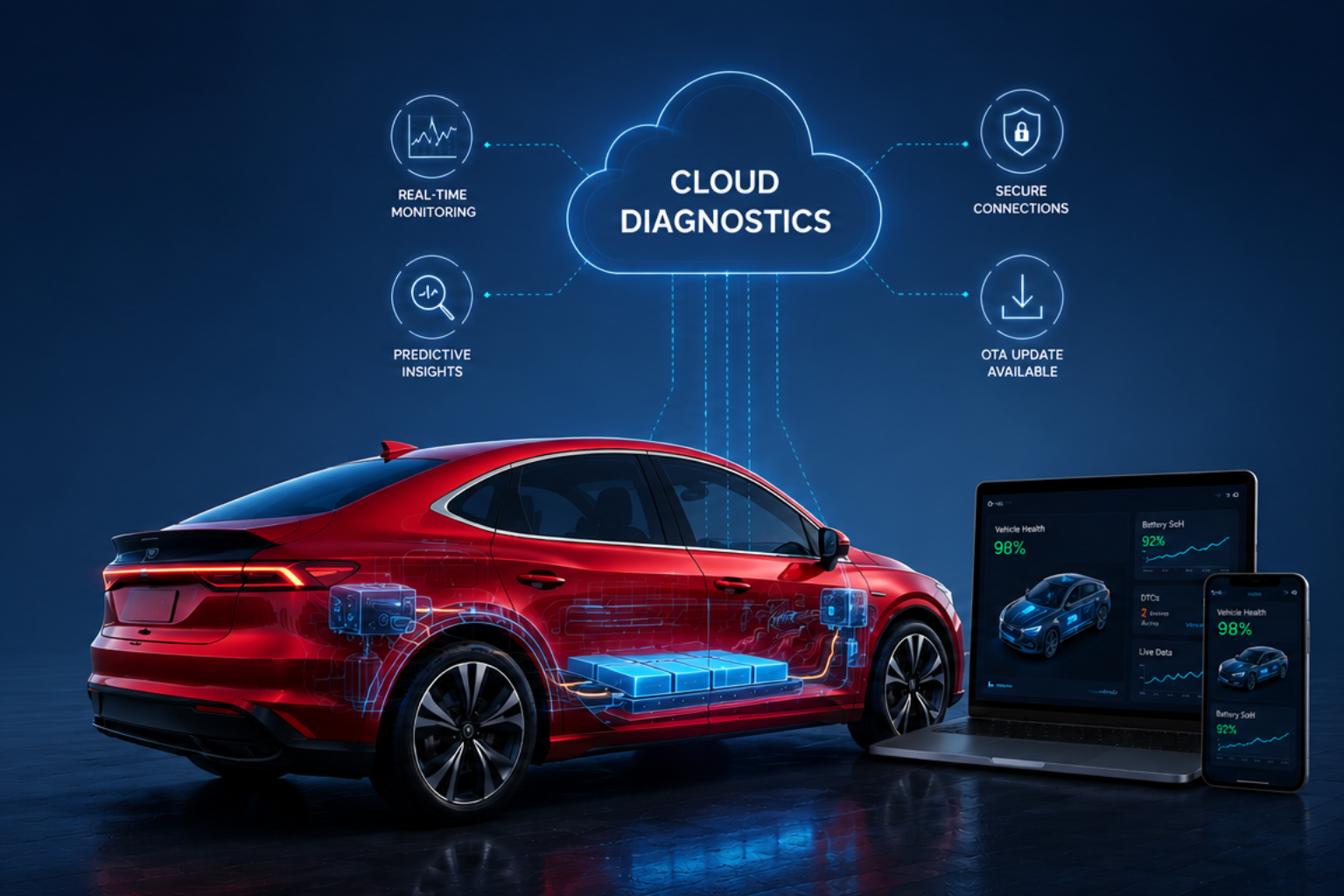
OTA updates are typically orchestrated through backend platforms that manage campaign rollout, version control, and vehicle targeting across large fleets.
Modern implementations rely on end to end FOTA frameworks to ensure secure delivery, controlled deployment, and reliable update execution across multiple ECUs.
However, updating software in safety critical automotive systems requires strict control, verification, and fail safe mechanisms. This is where the bootloader plays a vital role.
What is an ECU Flash Bootloader
An ECU Flash Bootloader is a specialized piece of software responsible for managing firmware updates and initializing the ECU startup process.
It is the first software executed when an ECU powers on, and it controls whether the ECU runs the existing firmware or installs new software.
In the context of OTA updates, the bootloader performs several critical tasks:
- Receiving firmware update commands
- Verifying software authenticity
- Writing firmware to ECU memory
- Ensuring update integrity
- Handling recovery in case of failure
Modern implementations use secure flash bootloaders designed with built in authentication, rollback protection, and fail safe mechanisms to support production grade OTA updates.
In addition, modern bootloaders also enforce secure boot policies, version control, and rollback protection, making them a critical part of the ECU cybersecurity architecture.
Without a secure bootloader, OTA updates could corrupt ECU firmware or expose the system to cyberattacks.
Step by Step What Happens Inside an ECU During an OTA Update
When an OTA update is triggered, multiple layers of the vehicle architecture work together to safely install new firmware. The process inside the ECU can be summarized in the following stages:
1. Update Package Delivery
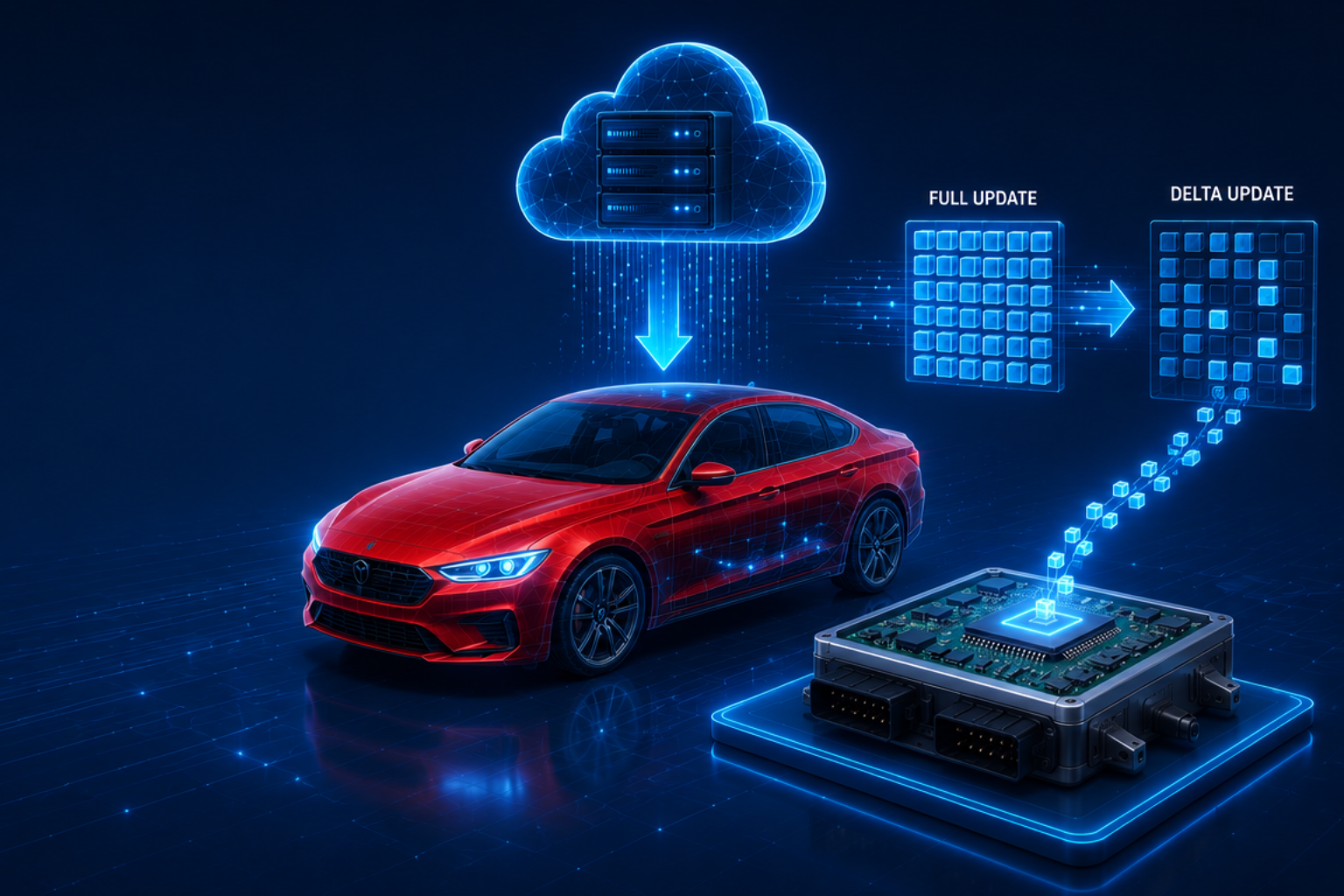
The OTA backend sends the firmware package to the vehicle via the TCU or gateway ECU, which distributes it to the target ECU over in vehicle networks such as CAN or Automotive Ethernet.
The package typically includes:
- Firmware binary
- Digital signature
- Metadata and version information
- Integrity checks
Modern systems may use delta updates to reduce bandwidth and improve efficiency.
2. Secure Programming Session Initiation
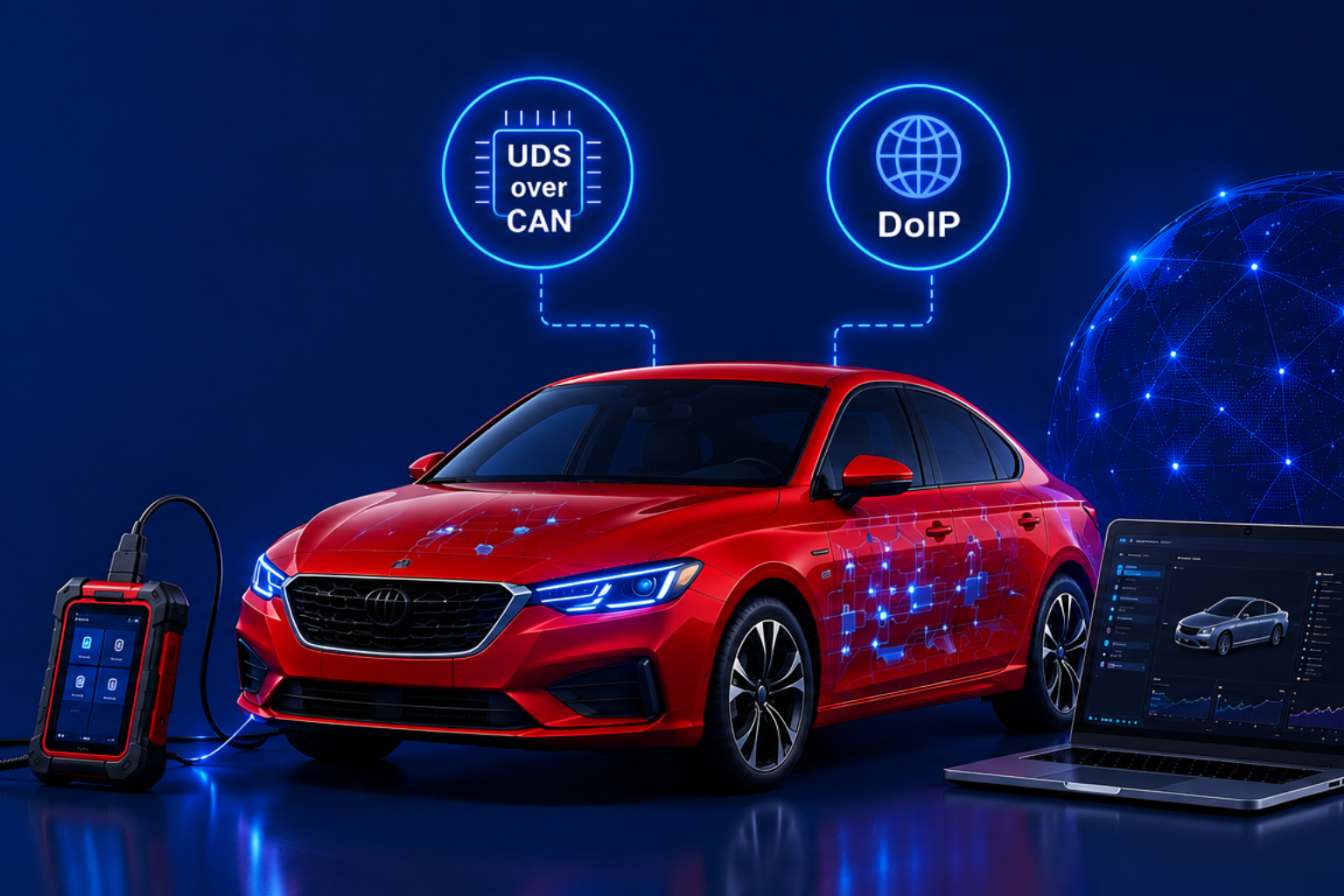
The ECU enters programming mode through diagnostic protocols such as UDS.
During this stage:
- Normal application execution is paused
- A diagnostic session is established
- Security access authentication is performed
This ensures that updates are executed only under controlled and authorized conditions.
3. Bootloader Controlled Flashing
The bootloader takes control and manages the update process:
- Erases target memory regions
- Writes firmware in blocks
- Verifies data during transfer
Because it operates independently of the application, updates remain possible even if the main software is corrupted.
4. Firmware Authentication and Integrity Validation
Before and during flashing, the bootloader validates the firmware using:
- Digital signature verification
- Cryptographic hash checks
- Certificate validation
These checks are typically supported by Hardware Security Modules, which securely store cryptographic keys and execute verification operations.
If verification fails, the ECU rejects the update to prevent malicious firmware installation.
5. Safe Activation and Rollback Protection
After successful flashing:
- The firmware is fully validated
- Activation is performed
In A or B architectures:
- The new firmware is activated only after complete verification
- The previous version is retained for rollback
6. ECU Reboot and Post Update Validation
The ECU restarts and executes the updated software.
- Control is transferred from bootloader to application
- Update status is reported
- Post update diagnostics may be performed
Multi ECU OTA Orchestration Why Single ECU Updates Are Not Enough
In modern vehicles, OTA updates rarely target a single ECU. Instead, multiple ECUs must be updated in a coordinated manner to maintain system consistency.
This introduces additional complexity:
- Dependency management between ECUs
- Sequencing of updates across domains
- Gateway controlled update orchestration
- System level rollback strategies
The bootloader ensures each ECU update is safe, while the OTA system ensures overall vehicle consistency.
Why the Bootloader is Critical for OTA Updates
The ECU Flash Bootloader is one of the most critical software components in automotive cybersecurity and reliability.
A well designed bootloader ensures:
- Secure firmware updates
- Protection against malicious software
- Reliable OTA installations
- Recovery from interrupted updates
- Compliance with automotive security standards
It also acts as the enforcement point for secure boot, software authenticity, and update policies defined by the OEM.
Key Security Features of Modern ECU Flash Bootloaders
Modern automotive bootloaders include several security mechanisms to protect firmware updates:
- Secure Boot integration
- Firmware authentication
- Encryption support
- Rollback protection
- Fail safe recovery mechanisms
- Diagnostic access control
Additional advanced features include secure logging and integration with vehicle cybersecurity monitoring systems.
These protections align with industry standards such as ISO SAE 21434 and UNECE R155.
Enabling OTA Ready ECUs with ElectRay
As OTA updates become a core capability for modern EV and software defined vehicle platforms, OEMs need production ready embedded software components that are secure, scalable, and standards compliant.
ElectRay provides a comprehensive set of automotive software solutions designed to enable reliable OTA updates and advanced diagnostics:
- UDS Stack compliant with ISO 14229
- OBDonUDS Stack aligned with SAE J1979 2
- Secure Flash Bootloader for safe ECU reprogramming
- FOTA solution for end to end firmware update management
These solutions enable OEMs and Tier 1 suppliers to build scalable, secure, and OTA ready ECU architectures.
Conclusion
OTA updates are transforming how vehicles receive software improvements, security patches, and new features.
Behind every successful OTA update lies a secure and reliable ECU Flash Bootloader managing the entire firmware update process.
From authentication and flashing to verification and safe activation, the bootloader ensures that vehicle software updates are secure, controlled, and fail safe.
In the era of software defined vehicles, the bootloader is a strategic enabler of secure and scalable vehicle software evolution.