3 Minutes Read
India’s vehicles are no longer purely mechanical machines. The average modern EV carries over 200 million lines of code, with software now accounting for approximately 40% of total vehicle value (automotive industry estimates, 2025). As Indian OEMs accelerate toward Software-Defined Vehicle (SDV) architectures, the ability to deploy, update, and secure that software across every ECU has become both an engineering necessity and a strategic business capability. At the centre of that capability sits the Flash Bootloader (FBL), the low-level software layer that controls every firmware write operation across the vehicle’s electronic systems, from the Battery Management System to the Traction Inverter.
What Is a Flash Bootloader?
Think of a Flash Bootloader as the BIOS of a vehicle ECU. It occupies a protected region of the ECU’s non-volatile memory and runs independently of the main application software. Its two core functions are non-negotiable: integrity verification at every power-on, ensuring that application software is valid and untampered; and controlled reprogramming, creating a secure channel to erase old firmware and write new code without physical disassembly. Without a secure and scalable bootloader, neither high-volume production flashing nor over-the-air (OTA) updates can operate reliably.
In essence, the bootloader is the gatekeeper of ECU software integrity. If compromised, the entire vehicle platform becomes vulnerable.
Stage 1: The Development Phase
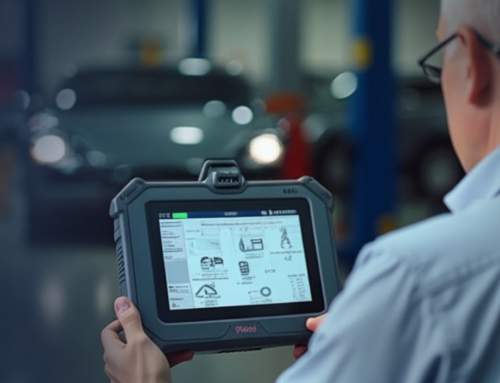
During R&D, engineering teams iterate at high speed, flashing multiple firmware versions daily to tune battery thermal algorithms, motor torque curves, or regenerative braking profiles. The FBL must be able to keep pace without becoming a bottleneck. ISO 14229 (UDS) governs the diagnostic communication protocol underpinning all bootloader operations. A production-grade UDS stack during this phase ensures the communication pipe is stable even when application code is still evolving, protecting expensive hardware from calibration errors and partial writes during early-stage testing.
ElectRay’s UDS Stack is a production-grade, AUTOSAR-compliant solution that provides the stable communication foundation OEM development teams need from day one of ECU bring-up.
Stage 2: The Production Phase
At end-of-line (EOL) in high-volume manufacturing plants, flashing speed directly impacts production throughput. Modern FBLs are engineered for high-speed data transfer over CAN-FD or Automotive Ethernet, enabling large firmware packages to be written within tight cycle-time windows. A critical security measure at this stage is the RAM-resident flash driver: the code segment that physically writes to ECU memory is loaded into RAM only during the flashing process and discarded immediately after, leaving no persistent write-access path that could be exploited later in the vehicle’s life.
ElectRay’s Secure Flash Bootloader is a production-grade solution supporting high-speed EOL flashing, compatible with Infineon, NXP, Renesas, Microchip and other leading EV ECU platforms.
Stage 3: OTA Updates and Cybersecurity
Once vehicles reach the road, the bootloader becomes the last line of defence for every software update. The global automotive OTA market was valued at USD 5.2 billion in 2025 and is forecast to reach USD 25 billion by 2035 (Future Market Insights, 2025). India is the second-fastest growing OTA market globally, at a CAGR of 21.3%, driven by rising connected vehicle penetration and 5G rollout. Tata Motors and Mahindra have already accelerated domestic OTA frameworks to serve this demand.
Securing this update pipeline requires three technical pillars:
- Asymmetric cryptography (RSA/ECDSA): Every firmware package must carry a valid OEM digital signature. If the signature fails verification, the FBL rejects the update entirely.
- Dual-bank (A/B) architecture: New firmware is written to an inactive partition while the vehicle continues operating on the current version. The switch occurs only after 100% successful verification, eliminating the risk of a bricked ECU mid-update.
- Hardware Security Module (HSM) integration: Cryptographic operations are offloaded to a dedicated HSM co-processor, protecting private keys from software-layer attacks and meeting ISO/SAE 21434 security requirements.
For EVs specifically, the FBL must also maintain compatibility with ZEVonUDS (SAE J1979-3) standards, ensuring that sensitive battery health data and high-voltage subsystem parameters remain intact and correctly versioned through every firmware refresh.
The Regulatory Imperative: AIS-189 and ISO 24089
For Indian OEMs, a secure bootloader is now a legal requirement. AIS-189, India’s automotive cybersecurity regulation modelled on UNECE R155, is effective for new vehicle types from October 2025 and covers all vehicle types by October 2028. It mandates a certified Cybersecurity Management System (CSMS) across the full software lifecycle, including ECU reprogramming. ISO 24089 (Software Update Management) further governs how OTA updates are designed, validated, and deployed. A bootloader without cryptographic authentication and rollback safety cannot meet either standard, making compliance a hard commercial gate, not a roadmap item.
The SDV Era: Why Bootloader Strategy Is Brand Strategy
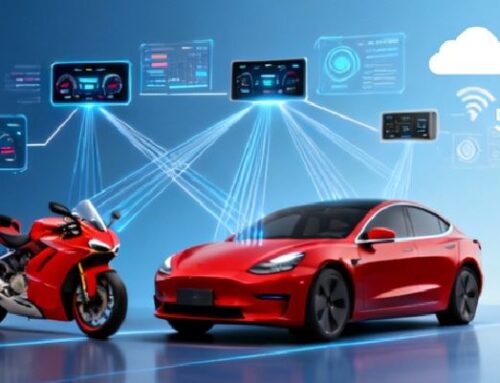
As Indian EVs shift toward zonal SDV architectures, bootloaders must scale with them. High Performance Computers replacing dozens of discrete ECUs change the complexity of what an FBL must manage. Delta OTA updates, transmitting only changed code segments, to become standard to cut bandwidth and update time, while AI-driven scheduling determines the optimal update window based on usage patterns and battery state. OEMs that treat the bootloader as a commodity will face recalls and compliance failures. Those that treat it as a strategic foundation unlock a vehicle that improves across its entire lifetime. In India’s fast-scaling EV market, the bootloader is not a start-up cost; it is a long-term lifecycle asset.
ElectRay’s Secure Flash Bootloader is a production-grade, security-hardened solution built for the full EV ECU lifecycle, from development bench to field OTA, with AIS-189 and ISO 24089-aligned architecture.