3 Minutes Read
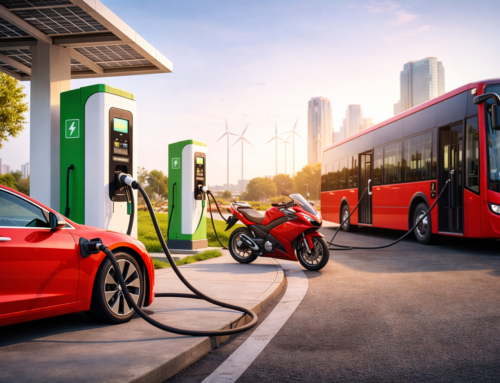
The familiar roar of internal combustion engines is steadily being replaced by the quiet hum of electric motors across India. From Delhi’s dense traffic corridors to Bengaluru’s elevated terrain, the EV shift is no longer experimental — it is operational and scaling rapidly. SIAM data shows electric two-wheelers and commercial vehicles leading year-on-year growth.
The EV shift across India is no longer experimental; it is operational and scaling rapidly. India sold over 2.27 million EVs in CY2025, with electric two-wheelers and three-wheelers accounting for 91% of all registrations (Vahan data, 2025). Yet while range and charging speed dominate conversations, a more critical layer determines whether these vehicles stay reliable in real-world Indian conditions.
If the battery is the heart of an EV, diagnostics is its central nervous system, continuously sensing, interpreting, and protecting the vehicle. In a country defined by extreme heat, monsoons, and infrastructure variability, advanced diagnostics are foundational to safety, uptime, and consumer trust.
UDS: The Universal Language of Modern EVs
Traditional vehicles could often be diagnosed mechanically. EVs have changed that equation.
With high-voltage architectures and software-driven control systems, EV failures are rarely visible; they are digital. A battery imbalance or inverter fault must be read, not heard.
This is where ISO 14229 – Unified Diagnostic Services (UDS) becomes essential. ISO 14229 provides the standardised protocol for diagnostic tools to communicate with any ECU, independent of supplier or platform, and implemented across all tier-1 OEMs globall. For Indian OEMs scaling across 2W, 3W, LCV, and bus segments, UDS delivers structured fault management, ECU health monitoring, secure firmware flashing, and compliance with AIS-156, AIS-038 Rev2, and CMVR requirements. Without it, EV platforms risk fragmentation and escalating service costs.
ElectRay’s UDS Software Stack is a production-grade, AUTOSAR-compliant solution that enables Indian OEMs to deploy diagnostic-ready ECUs across all vehicle segments, right out of the box
OBDonUDS: Bridging Regulatory Compliance and EV Architecture
As Indian vehicle platforms evolve, manufacturers increasingly develop shared ECU architectures across ICE, hybrid, and electric variants. Even in electrified portfolios, regulatory diagnostic frameworks remain important particularly for export markets and hybrid configurations.
SAE J1979-2 (OBDonUDS) enables regulatory OBD services to operate over modern UDS-based ECU architectures. Instead of running legacy emission diagnostics separately, OBD functions are transported through the standardized UDS communication layer.
This provides several advantages:
- Unified DTC handling across multiple ECUs
- Consistent diagnostic access via a single protocol
- Simplified compliance integration for global markets
- Scalable architecture across mixed powertrain portfolios
For Indian OEMs navigating both AIS-137 OBD norms and modern EV ECU architectures simultaneously, OBDonUDS delivers compliance without complexity, a single unified stack that satisfies the regulator and serves the engineer.
ElectRay’s OBDonUDS Software Stack is a production-grade, AUTOSAR-compliant solution that seamlessly integrates OBD regulatory diagnostics into UDS-based EV platforms, enabling Indian OEMs to achieve full compliance without architectural compromise
ZEVonUDS: Purpose-Built for Electric Platforms
While UDS forms the base layer, EV-specific systems demand deeper visibility into high-voltage components.
SAE J1979-3 (ZEVonUDS) extends diagnostics beyond emission checks to monitor electrified subsystems such as traction batteries and inverters. Instead of tailpipe testing, it evaluates electrical system health.
For India, three parameters are critical such as:
- Battery State-of-Health (SoH): essential for warranty and resale, especially given that many OEMs allocate only 3–5% of vehicle cost to BMS (WRI India, 2024)
- Thermal Performance: Li-ion cells degrade measurably above 40°C, a threshold India exceeds for 4–6 months annually
- Charging Communication Integrity: diagnosing interoperability faults across India’s 29,000-station charging network (Bolt.Earth, 2025)
As AIS-156 mandates tighten and BIS safety standards evolve, ZEVonUDS will shift from competitive advantage to regulatory necessity.
ElectRay’s ZEVonUDS Software Stack is a production-grade, AUTOSAR-compliant solution purpose-built for traction battery and inverter diagnostics, giving OEMs surgical visibility into EV-specific subsystems from day one.
SOVD: Diagnostics for the Software-Defined Era
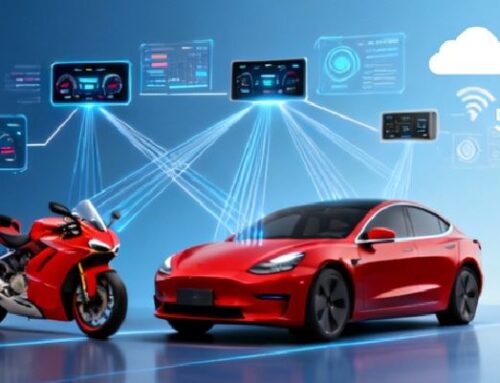
As vehicles become increasingly software-defined, diagnostics must extend beyond workshop tools and CAN-based communication. Service-Oriented Vehicle Diagnostics (SOVD) compliance with ISO 17978 introduces a service-based, API-driven diagnostic architecture that enables remote access to vehicle data over secure IP networks.
Unlike traditional diagnostic sessions limited to physical service tools, SOVD allows:
- Remote fault interrogation
- Cloud-integrated service workflows
- Secure ECU software management
- Over-the-air diagnostic operations
For Indian OEMs preparing for global markets and connected mobility ecosystems, SOVD aligns diagnostics with modern vehicle architectures based on centralized computing and zonal controllers. It represents the shift from tool-based diagnostics to platform-based diagnostics, a critical step in enabling scalable, software-defined EV ecosystems.
ElectRay offers SOVD development services to help Indian OEMs design, integrate, and deploy SOVD-compliant diagnostic architectures, accelerating the transition to connected, software-defined vehicle platforms.
The Indian Operating Environment
India presents four diagnostic stress factors that global standards do not fully anticipate:
- Monsoon-related water ingress: triggering sensor anomalies in unprotected 2W and 3W fleets
- High ambient temperatures: Accelerating battery degradation
- Stop-and-go urban traffic: Placing uniquely high thermal loads on powertrains
- Road vibration: Affecting connectors and harnesses
Detecting localized thermal anomalies early, for example, can prevent severe battery events. Diagnostics therefore becomes the first active layer of safety protection, not merely a troubleshooting tool.
From Reactive Repairs to Predictive Intelligence
The real transformation is moving from reactive troubleshooting to predictive maintenance.
Connected diagnostic systems can surface vehicle risk 20-45 days before traditional diagnostics raise alarms, and 52% of fleet managers report that AI-powered predictive maintenance directly reduced downtime in 2025 (Intangles, 2025).
IoT-enabled fleets have recorded maintenance savings of 10–15% (Autocar Professional, 2025).
For India’s National Electric Bus Programme, targeting 50,000 e-buses by 2027, and last-mile e-rickshaw operators whose daily revenue depends on uptime, predictive diagnostics protect both revenue and passenger safety.
Building Trust in India’s EV Ecosystem
The greatest barrier to EV adoption is reliability confidence.
Vehicles must perform consistently across climates, terrains, and charging ecosystems. Diagnostics enables that trust by making vehicle health measurable, transparent, and manageable.
India’s EV success will depend not only on battery advancements but on diagnostic maturity, standardized communication frameworks, and software robustness.
With over 60% of three-wheelers already electric and e-buses scaling nationally, diagnostics is no longer a back-office concern.
Electric mobility is a transition to software-defined, continuously monitored platforms. And in this new era, diagnostics is not a support function.
It is the backbone that keeps India’s electric future moving.