4 Minutes Read
The electric vehicle industry is redefining mobility at a pace the traditional automotive industry never experienced. From connected platforms and OTA updates to intelligent battery management and software-defined architectures, the EV ecosystem is moving fast. But speed without discipline is a liability. A modern EV ECU network runs over 200 million lines of code. Level 5 autonomous vehicles will require close to 1 billion. Software at this scale cannot be managed through intuition and iteration alone; it requires the engineering process maturity that the ICE automotive industry spent decades building.
For Indian EV OEMs racing to meet AIS-189, AIS-190, and ISO 26262 requirements while simultaneously scaling production, understanding what ICE automotive got right is not optional; it is a competitive advantage.
1. Validation and Reliability Must Come First
The ICE automotive industry’s most durable discipline is its validation culture. Every component, ECU, and subsystem passes through durability testing, thermal validation, environmental assessment, compliance verification, and long-term endurance before reaching production. This culture emerged from hard experience: the global automotive industry absorbs over 50 million vehicle recalls annually, costing OEMs an estimated USD 22 billion per year. Most recalls trace back to insufficient validation, not insufficient innovation.
The EV industry is repeating some of these lessons the hard way. Software instability, OTA failures, thermal management issues, and charging inconsistencies have generated recalls across multiple EV OEMs in India and globally. As vehicles become more software-centric, the validation surface grows, not shrinks. EV programs must invest in:
- Functional safety validation against ISO 26262 ASIL targets
- Hardware-in-the-Loop (HIL) and Software-in-the-Loop (SIL) test environments
- OTA update validation across all target ECU variants and hardware revisions
- Cybersecurity testing including fuzz testing, penetration testing, and TARA-driven threat validation per ISO/SAE 21434 and AIS-189
- Automated regression testing: essential as OTA update frequency increases and each release must be validated across the existing fleet’s full ECU variant matrix
ElectRay’s Cybersecurity and Functional Safety engineering services provide TARA-based threat modelling, ISO 26262 ASIL decomposition, HIL-ready software integration, and AIS-189 CSMS compliance support for EV OEM programs.
2. Functional Safety and Cybersecurity Are Not Optional Additions
The ICE industry’s journey from basic FMEA through IEC 61508 to ISO 26262 took over two decades. ISO 26262, published in 2011 and revised in 2018, is now the mandatory functional safety standard for all road vehicle software in India under AIS-189’s CSMS framework. The EV industry does not have two decades; it has program cycles of 18 to 36 months to build ASIL-compliant software from scratch.
Cybersecurity followed a parallel trajectory in ICE: from ad-hoc security reviews through EVITA and JASPAR threat frameworks to the full ISO/SAE 21434 standard, which India’s AIS-189 directly mirrors. The lesson from ICE is unambiguous: teams that embed safety and security at architecture level, not as post-hoc testing, ship faster, fail less, and pass homologation at ARAI and ICAT without costly rework cycles.
For Indian EV OEMs, both ISO 26262 and AIS-189 compliance are now type approval requirements, not aspirational targets. Non-compliance means market access denial.
ElectRay’s integrated Cybersecurity and Functional Safety services, aligned with ISO/SAE 21434, ISO 26262, AIS-189, and AIS-190, provide end-to-end CSMS development, ASIL decomposition, and homologation-ready documentation for ARAI and ICAT submission.
3. Standardisation Enables Scale
The ICE ecosystem achieved global scale through standardisation. Common communication protocols (CAN, LIN, FlexRay, and Automotive Ethernet), shared diagnostic frameworks (ISO 14229 UDS, OBD-II), AUTOSAR software architecture, and supplier quality systems (IATF 16949, PPAP, APQP) reduced integration complexity and enabled OEMs to source from a global supply base without rebuilding every interface.
The EV ecosystem is still fragmented across charging standards, battery architectures, software platforms, communication protocols, OTA frameworks, and diagnostic strategies. This fragmentation is measurable: India alone has over 83 Charge Point Operators operating with variable software standards and no mandatory diagnostic interoperability, as the Delhi EV Policy 2026 infrastructure gap data illustrates. Without standardisation, each OEM-charger interface becomes a custom integration project.
The ICE lesson: standardise early, customise where it matters. EV programs should adopt:
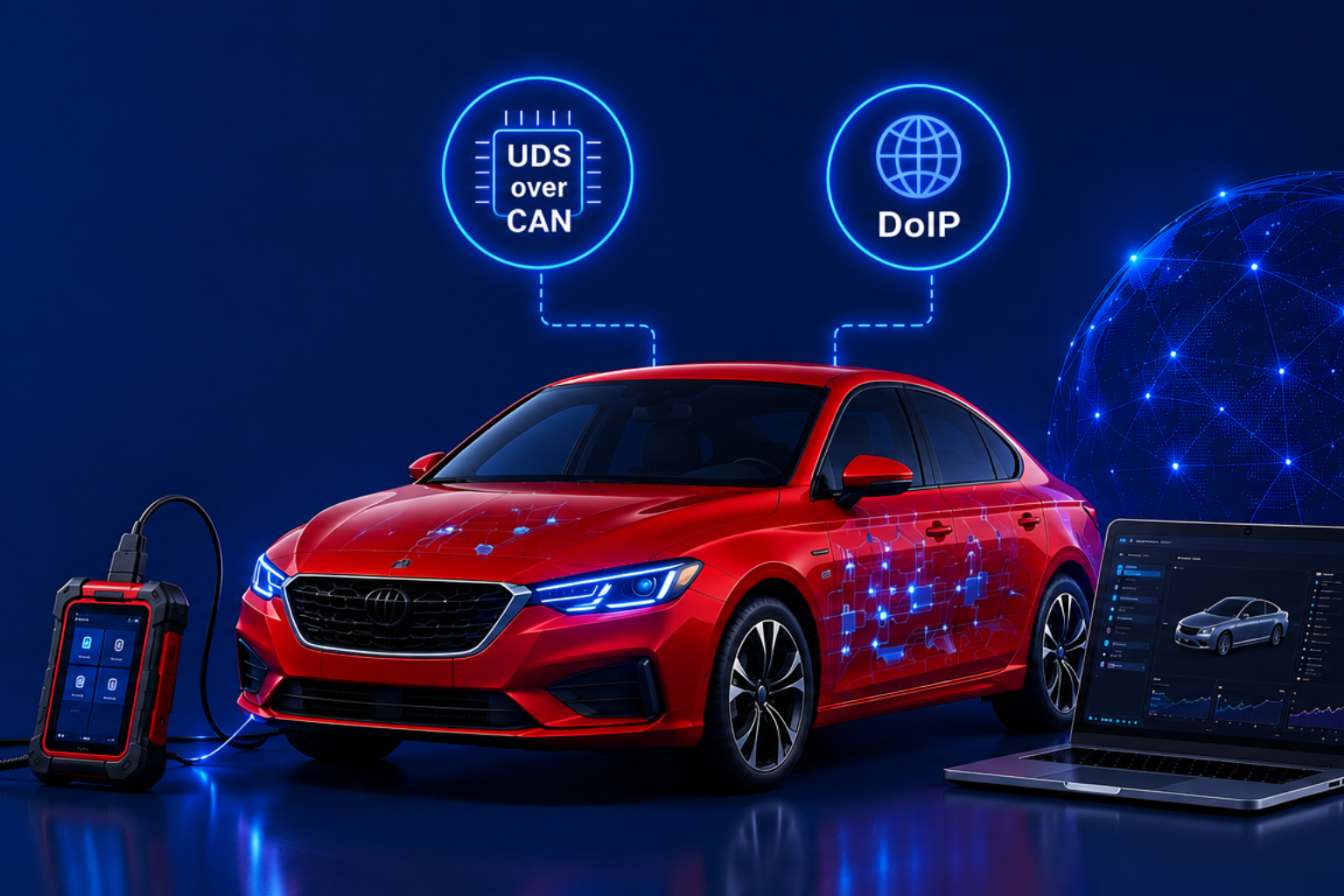
- UDS (ISO 14229): the ICE industry’s proven diagnostic framework, directly applicable to BMS, OBC, VCU, and motor controller ECUs
- Automotive Ethernet: the high-bandwidth backbone of zonal E/E architectures, AUTOSAR Adaptive platforms, and DoIP-based diagnostic communication; essential for SDV ECU networks handling OTA, ADAS, and real-time telemetry data simultaneously
- AUTOSAR Classic and Adaptive: proven ECU software architecture for both resource-constrained and high-compute EV platforms
- ASPICE (Automotive SPICE): the software process maturity framework that Tier-1 suppliers and OEMs across Europe and increasingly India are requiring as a qualification gate for EV software suppliers
- ISO 26262 and AIS-189: functional safety and cybersecurity standards that define the compliance floor, not the ceiling
ElectRay’s UDS Stack, ZEVonUDS Stack, and OBDonUDS Stack provide AUTOSAR-aligned, production-grade diagnostic standardisation for EV ECUs across all vehicle segments, eliminating the custom integration overhead that fragmented diagnostic strategies create.
4. Process Maturity Is What Scales Quality
Manufacturing excellence in the ICE industry was not accidental. Lean manufacturing, APQP, Six Sigma, PPAP, failure analysis systems, and traceability frameworks were developed through decades of iteration and painful field failures. Many EV companies initially focused heavily on product innovation while underestimating production and process complexity, resulting in delays, quality inconsistencies, and supply chain disruptions at scale.
The software equivalent of manufacturing process maturity is ASPICE. Automotive SPICE defines engineering process capability levels from Level 1 (performed) to Level 3 (established), with most OEM supplier qualification requirements sitting at Level 2 or Level 3. An EV software team operating without ASPICE-aligned processes produces software that is harder to audit, harder to maintain, and more likely to fail homologation documentation reviews. Indian EV OEMs increasingly face ASPICE requirements from export market partners, Tier-1 suppliers, and government procurement programmes.
ElectRay’s software engineering services are delivered with ASPICE-aligned processes, supporting OEMs and Tier-1 suppliers in building audit-ready software development workflows and meeting export market supplier qualification requirements.
5. Diagnostics and Lifecycle Support Define Long-Term Trust
Traditional automotive companies built mature service and diagnostics ecosystems over decades. Standardised fault diagnostics, structured repair workflows, and field service infrastructure ensured long-term customer support at scale. The EV industry is compressing this timeline dramatically.
Modern EVs are more software-defined than any ICE vehicle ever was, making diagnostics more important, not less. India’s AIS-189 explicitly mandates post-approval monitoring and incident response for the vehicle’s entire operational life, meaning diagnostic infrastructure is a regulatory obligation, not a service add-on. AIS-190 requires version traceability across all ECUs for up to 10 years. An EV OEM that cannot remotely diagnose, patch, and verify ECU firmware across its deployed fleet is non-compliant by design.
EV programs must plan lifecycle support from day one, covering:
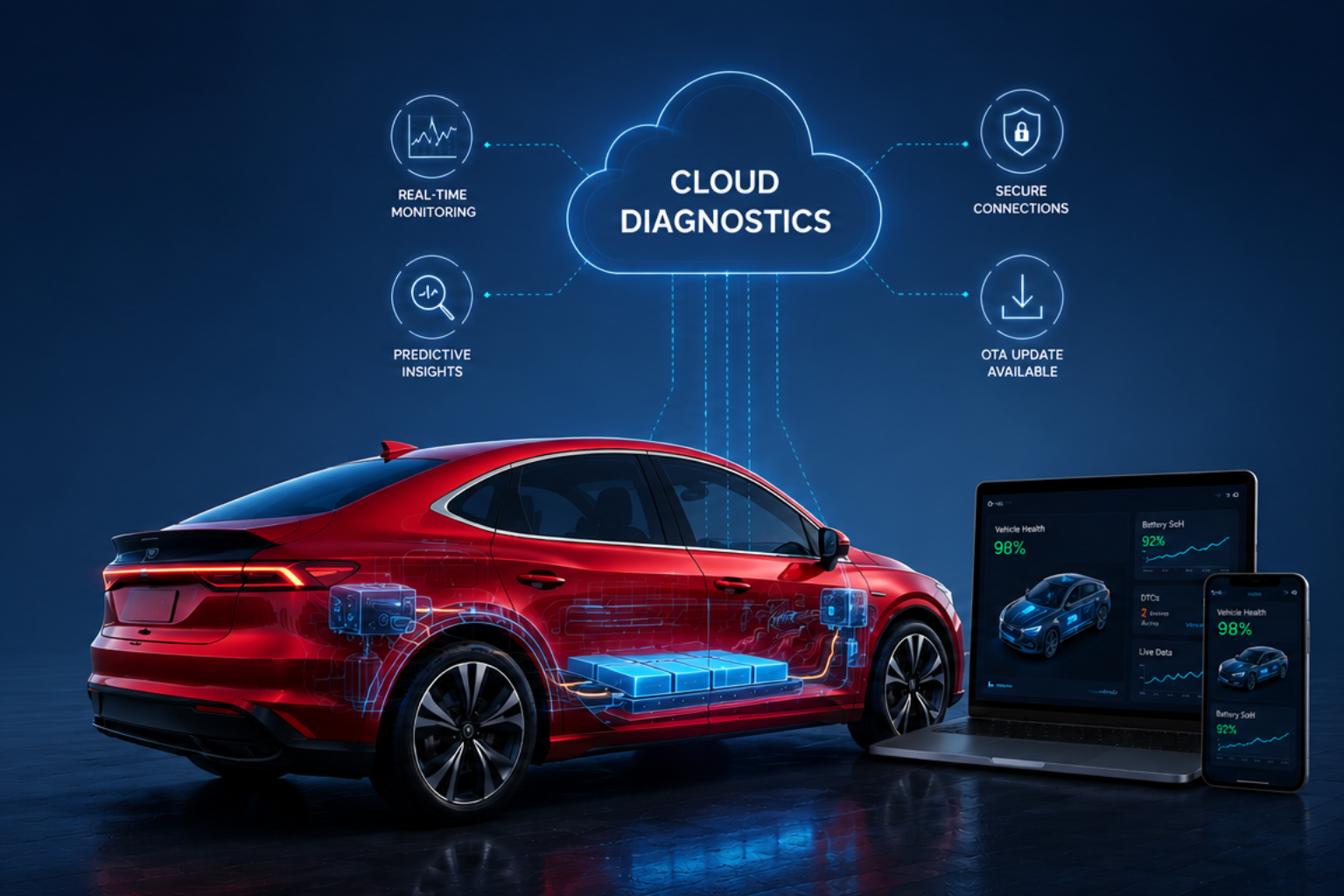
- Remote diagnostics and real-time fleet health monitoring
- Predictive maintenance using SoH, SoC, and thermal trend data
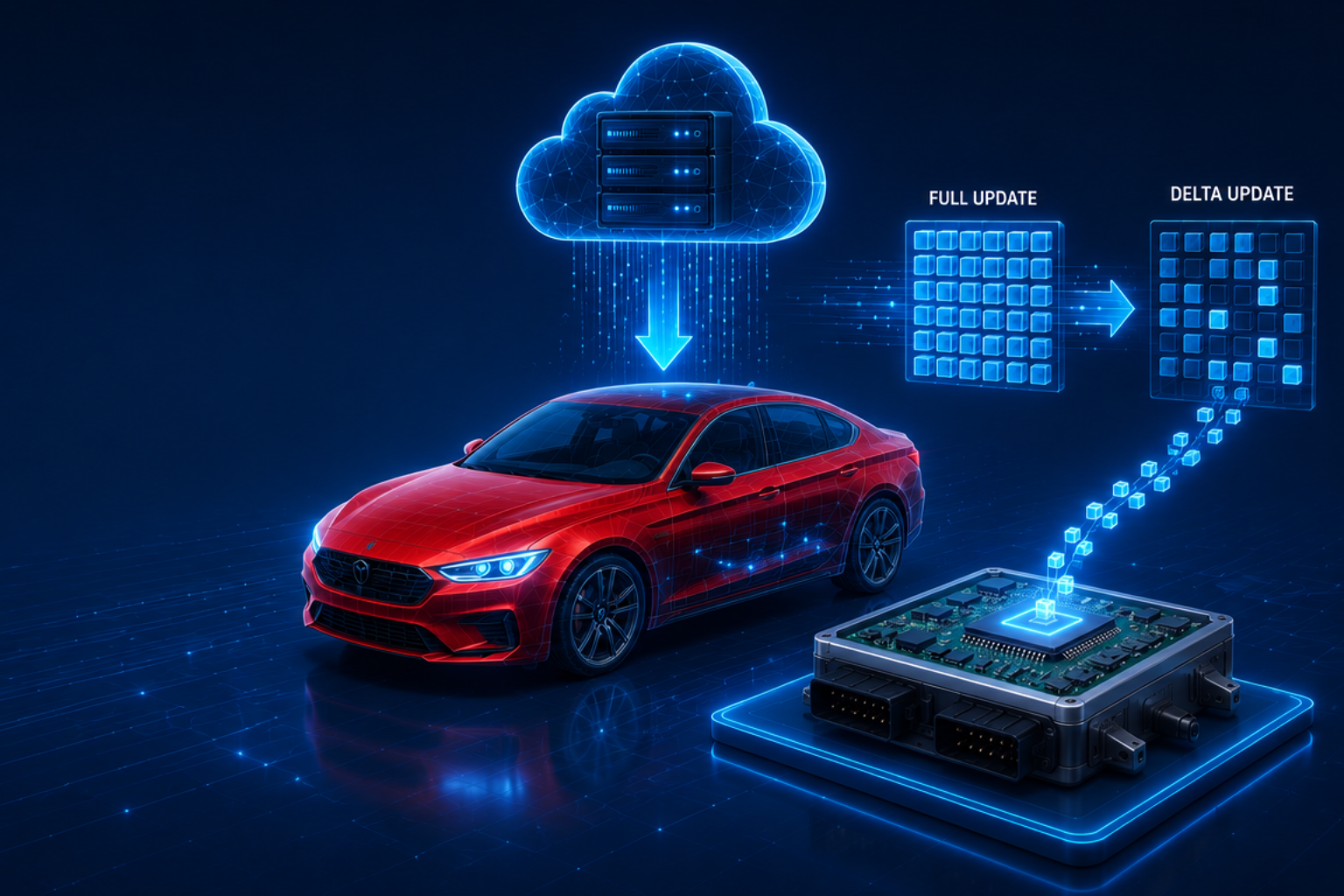
- Secure OTA firmware delivery with authenticated flashing, anti-rollback, and A/B partition management aligned with AIS-190
- Software Bill of Materials (SBOM) tracking to enable rapid CVE response across deployed ECU fleets
ElectRay’s Secure Flash Bootloader, FOTA Solution, and eConnectX Connected Vehicle Platform provide end-to-end lifecycle support from ECU firmware update management to cloud-scale fleet diagnostics, aligned with AIS-189 and AIS-190 requirements.
6. Supplier Ecosystems Determine Scalability
The ICE industry was built on strong Tier-1 and Tier-2 supplier ecosystems with mature qualification, quality audits, production coordination, and lifecycle support frameworks. The EV industry’s current phase of aggressive vertical integration makes sense at startup scale, but long-term scalability still depends on a reliable supplier network across semiconductor, software, battery, and embedded engineering domains.
For Indian EV OEMs, the supplier ecosystem challenge is compounded by the compressed AIS compliance timeline. Building functional safety, cybersecurity, diagnostics, and OTA capabilities in-house from scratch within a 24-to-36-month program cycle is not realistic for most teams. The ICE industry’s lesson: qualify trusted suppliers early, define clear interface contracts, and invest in collaborative development rather than isolated parallel workstreams.
Conclusion: Innovation Needs Discipline to Scale
The EV revolution is real and irreversible. But the companies that will define India’s EV decade are not those that move fastest in isolation; they are those that combine EV innovation with the engineering discipline the ICE industry took decades to develop. Validation culture, functional safety architecture, standardised diagnostics, ASPICE process maturity, and lifecycle thinking are not constraints on innovation. They are what makes innovation deployable at scale.
India’s compressed EV compliance timeline (AIS-189 in force from October 2025, AIS-190 requiring 10-year version traceability, and ISO 26262 embedded in type approval) means Indian OEMs do not have the luxury of learning these lessons sequentially. The ICE industry’s playbook is available now. The question is whether EV programs choose to use it.