4 Minutes Read
A decade ago, vehicle diagnostics meant a technician, an OBD-II dongle, and a laptop connected physically to the vehicle at a workshop. That model still exists, but it is no longer sufficient. The global automotive remote diagnostics market reached USD 16.5 billion in 2025 and is projected to grow to USD 29.2 billion by 2030 at a compound annual growth rate (CAGR) of 11.7% (The Business Research Company, 2025). For electric vehicles specifically, the EV remote diagnostics segment is growing at 20% CAGR, reaching USD 9 billion by 2031 (Reanin Research, 2025), driven by one fundamental fact: an EV is a software platform on wheels, and software platforms require continuous monitoring, not periodic inspection.
Why EVs Demand a Different Diagnostic Model
Internal combustion engine (ICE) vehicles have a limited number of electronic control units (ECUs) managing relatively predictable mechanical systems. An ICE engine’s behaviour between service intervals is largely determined by physics, not software state. An EV is structurally different. Its battery pack, motor controller, on-board charger (OBC), thermal management system, and vehicle control unit are all software-managed, continuously interdependent, and subject to degradation patterns that no periodic inspection can reliably anticipate.
Four specific characteristics of EVs make remote diagnostics not optional but essential:
- Battery State of Health (SoH) degradation: battery capacity fades non-linearly and is influenced by charging behaviour, thermal history, and usage patterns that change daily. A workshop inspection every six months captures a snapshot; remote diagnostics captures the trajectory, enabling early intervention before degradation becomes a warranty claim or safety event
- Thermal management sensitivity: EV battery packs operate within narrow temperature windows. Thermal anomalies that develop between service visits cannot wait for a scheduled inspection; they require real-time detection and, where possible, remote corrective action through battery conditioning protocols
- Charging fault complexity: an EV interacts with charging infrastructure at every charge event. Interoperability faults, communication errors between the vehicle and Charge Point Operator (CPO) systems, and SoC reporting discrepancies generate diagnostic data that is only actionable when captured continuously across the fleet, not retrospectively at a workshop
- OTA update validation: every firmware update delivered over-the-air must be verified as successfully applied, functionally validated, and traceable per AIS-190 requirements. This verification loop cannot exist without a remote diagnostic channel between the vehicle and the OEM backend
The Diagnostic Architecture: From OBD Port to Cloud Backend
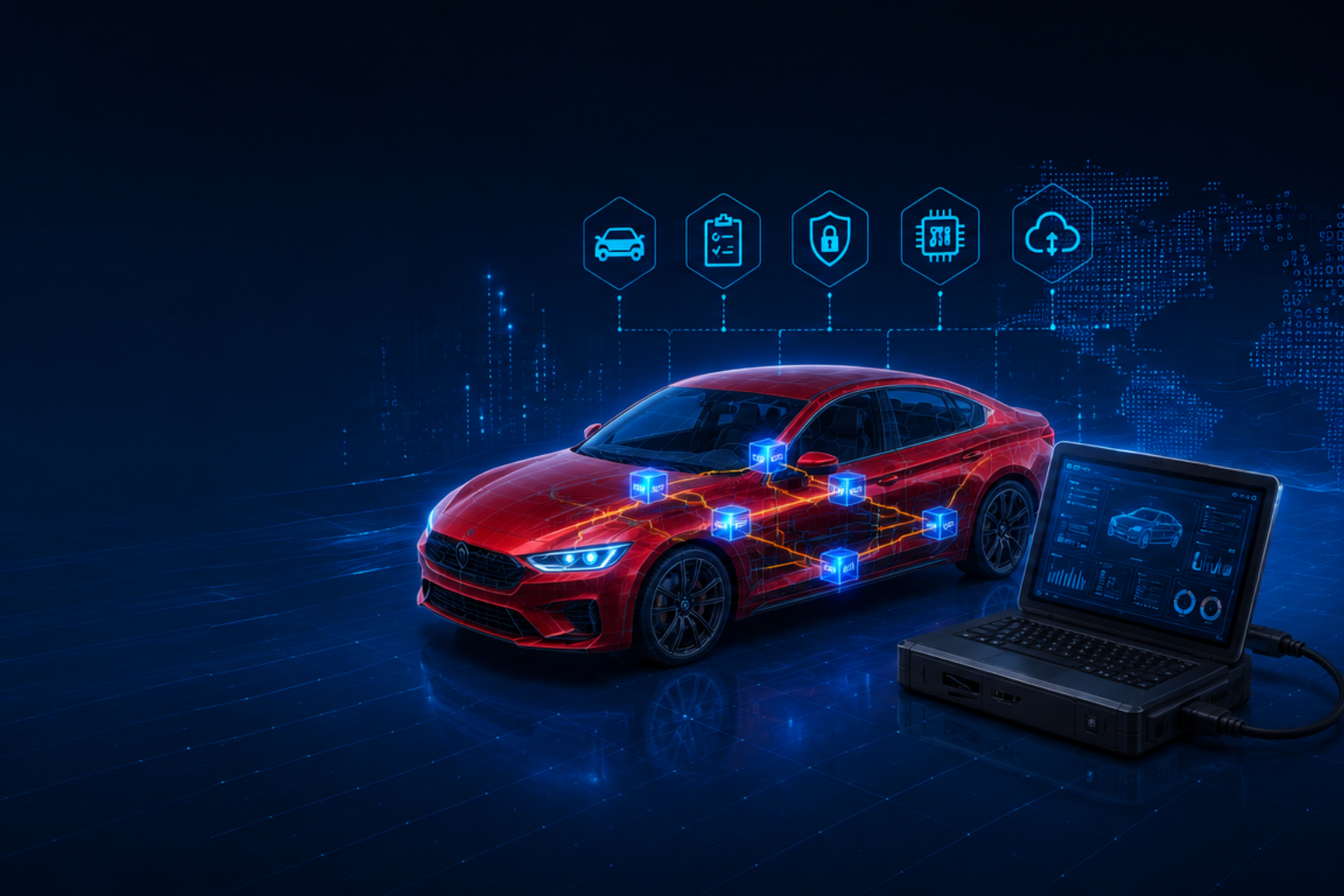
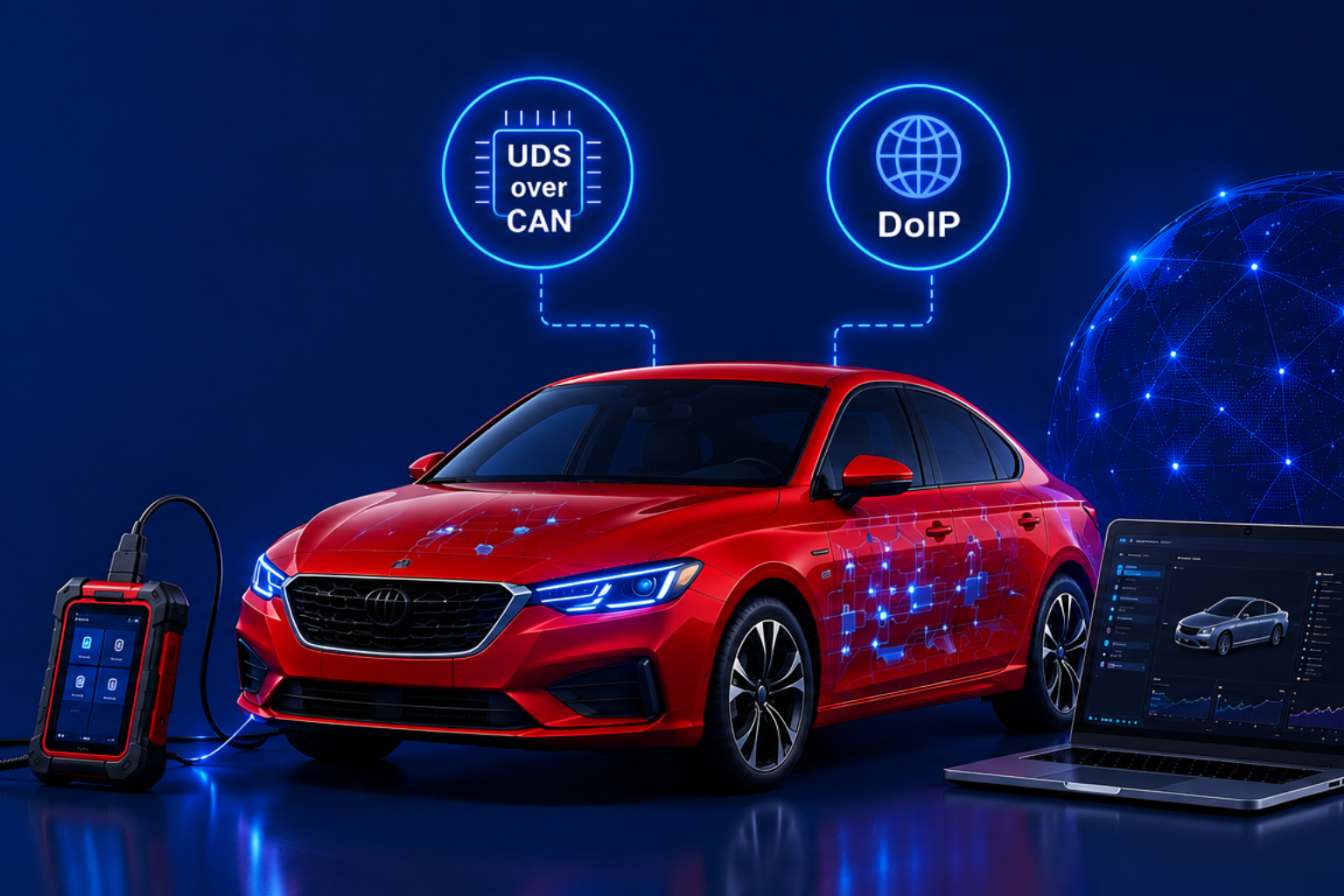
Traditional workshop diagnostics use a physical OBD-II interface connecting a scan tool to the vehicle’s CAN bus via ISO-TP (ISO 15765-2). The diagnostic session is local, sequential, and bounded by the physical connection. Remote diagnostics replaces the physical interface with a telematics ECU that maintains a persistent cellular or Wi-Fi connection to the cloud backend, enabling the same UDS (Unified Diagnostic Services, ISO 14229) diagnostic sessions to be initiated remotely.
The transport layer evolution is critical here. UDS over CAN (ISO-TP) remains the baseline for ECU-level communication within the vehicle. Within the vehicle, diagnostics increasingly move over DoIP (Diagnostics over Internet Protocol, ISO 13400) running on Automotive Ethernet. The telematics gateway then bridges these diagnostic sessions securely to cloud backend infrastructure through cellular or Wi-Fi connectivity. A DoIP gateway ECU in the vehicle routes diagnostic requests from the cloud to individual ECUs, including those still connected over CAN, without requiring every ECU to run an IP stack. This architecture enables a cloud diagnostic platform to address specific ECUs, read Diagnostic Trouble Codes (DTCs), access live data parameters, initiate routine controls, and trigger programming sessions without a technician or a physical tool anywhere in the loop.
The data volumes are significant: MAN Truck and Bus projects diagnostic data per commercial vehicle will scale to over 100 MB daily as 5G-enabled vehicle architectures and high-resolution sensor systems continue to expand (Mordor Intelligence, 2025). Managing this at fleet scale requires cloud infrastructure, not workshop tools.
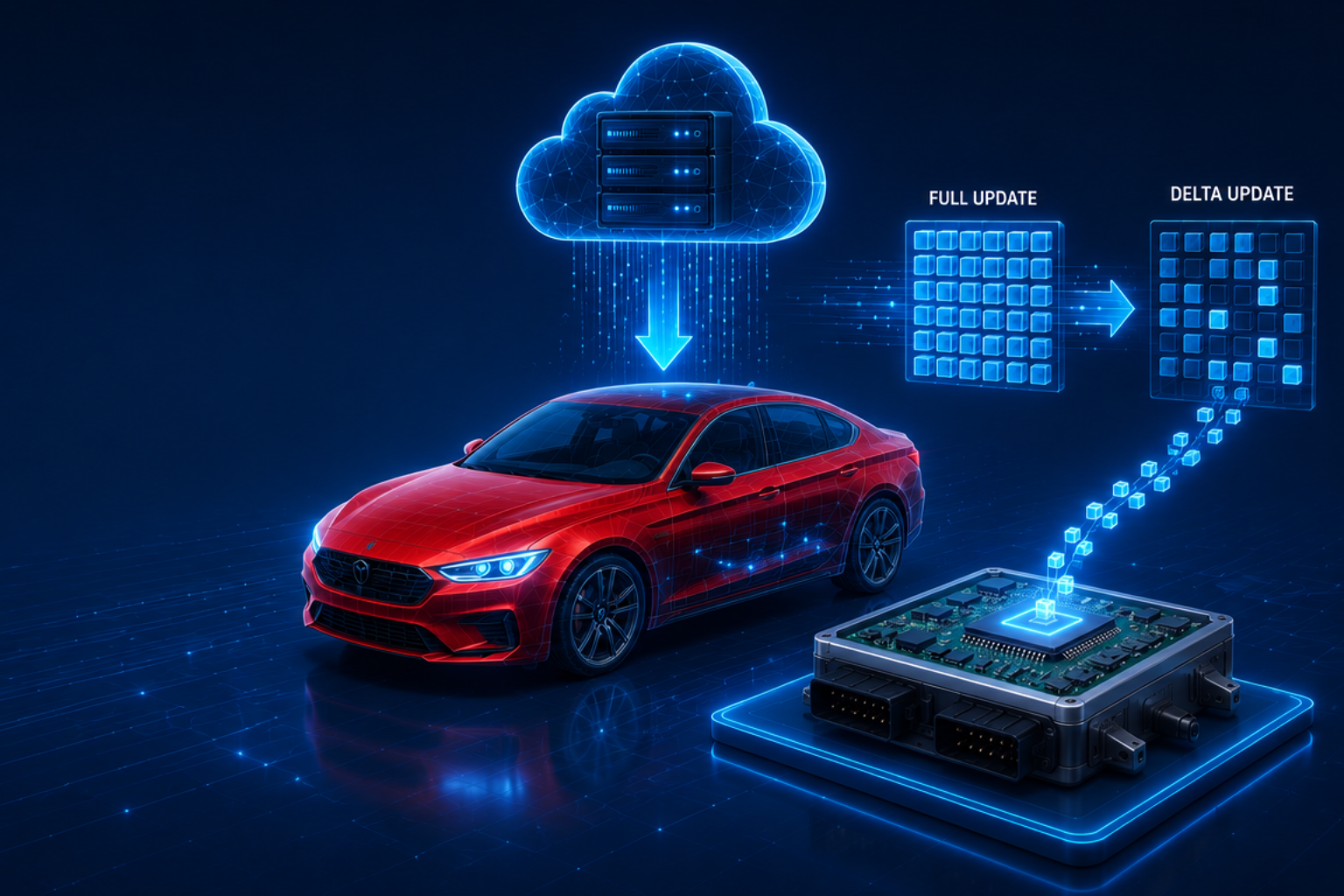
Modern EV architectures increasingly combine cloud diagnostics with edge analytics running inside telematics gateways and domain controllers. Instead of transmitting all raw diagnostic data continuously, edge systems preprocess events locally, prioritise anomalies, compress telemetry, and trigger cloud uploads selectively. This hybrid edge-cloud diagnostic architecture is becoming essential as SDV platforms scale toward gigabyte-level daily telemetry volumes.
ElectRay’s UDS Stack and ZEVonUDS Stack support both CAN-based and DoIP transport layers, enabling remote diagnostic session management for BMS, OBC, motor controller, and Vehicle Control Unit (VCU) ECUs from cloud backends, with full UDS service coverage including DTC management, live data, and ECU programming.
What Cloud-Based Diagnostics Enables
Moving diagnostics to the cloud is not simply a matter of remote access to workshop functions. It enables a qualitatively different class of vehicle health management that workshop tools cannot provide:
- Predictive maintenance: cloud platforms correlate DTC history, SoH trends, thermal logs, and charging behaviour across the entire fleet to identify failure precursors before they generate a fault code. A battery cell group degrading faster than its peers is a pattern visible across thousands of charge cycles in cloud data, invisible in a workshop inspection
- Fleet-level anomaly detection: when a software update causes unexpected behaviour in a subset of vehicles, cloud diagnostics detects the pattern within hours across the entire affected fleet, enabling a targeted rollback or patch before the issue scales. Workshop-based diagnostics would identify this one vehicle at a time, weeks later
- Warranty analytics: correlating DTC patterns with manufacturing batches, software versions, and usage profiles enables OEMs to identify root causes of warranty claims systematically, reducing both claim costs and future failure rates through targeted updates
- OTA feedback loops: cloud diagnostics validates firmware behaviour after deployment, enabling OEMs to monitor post-update stability, identify regressions, and automatically trigger rollback or corrective patches when abnormal behaviour is detected
- Post-production Cybersecurity Management System (CSMS) monitoring: India’s AIS-189 mandates ongoing monitoring and incident response for the vehicle’s entire operational life. Cloud diagnostics is the operational infrastructure for this requirement; without a live diagnostic channel, post-production CSMS monitoring is not practically achievable
Remote Diagnostics in the SDV Era
Software-defined vehicles are transforming diagnostics from a service function into a continuous operational capability. In SDV architectures, zonal controllers act as diagnostic aggregators: a zone controller collects DTC and parameter data from all ECUs within its physical domain and forwards consolidated diagnostic sessions to the central HPC or telematics gateway, reducing individual ECU polling overhead while increasing diagnostic coverage. Diagnostics, OTA updates, cybersecurity monitoring, predictive maintenance, and fleet analytics increasingly operate as a unified software lifecycle platform rather than separate engineering functions.
Centralised compute platforms and Ethernet-based communication are enabling OEMs to monitor, validate, update, and optimise vehicles continuously throughout their operational life. Remote diagnostics is becoming the operational backbone of this SDV lifecycle, not a workshop afterthought.
EV-Specific Diagnostic Parameters: Beyond Standard DTCs
Standard OBD-II and UDS diagnostic frameworks were designed around ICE vehicle parameters: engine speed, coolant temperature, fuel trim, exhaust emissions. EVs introduce a new class of diagnostic parameter that requires EV-specific extensions to the UDS framework, standardised under SAE J1979-3 (ZEVonUDS).
The EV-specific parameters that remote diagnostic platforms must monitor include:
- Battery SoH and SoC: real-time and historical State of Health and State of Charge, including cell-level imbalance data that predicts pack-level degradation
- Thermal management status: coolant flow rates, cell temperature distribution, thermal runaway precursor indicators, and active conditioning event logs
- Charging session data: charge current, voltage, duration, CPO communication status, and charging fault codes from OBC and charge port controller ECUs
- Isolation resistance: high-voltage isolation monitoring between battery pack and vehicle chassis, a safety-critical parameter with no ICE equivalent
- Regenerative braking performance: energy recovery efficiency trends that indicate motor controller or inverter degradation before it becomes a range or safety issue
ElectRay’s ZEVonUDS Stack provides SAE J1979-3-aligned diagnostic coverage for all EV-specific parameters across BMS, OBC, thermal management, and motor controller ECUs, delivering the parameter set that cloud diagnostic platforms require for meaningful EV fleet health management.
Securing the Remote Diagnostic Channel
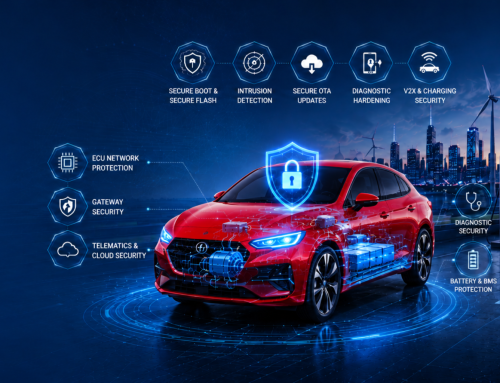
A remote diagnostic channel that can read DTCs, access live data, and initiate ECU programming sessions is a high-value attack target.
Securing it requires:
- Authentication of the diagnostic client before any session is established
- Secure encrypted communication mechanisms such as TLS, VPN tunnelling, or secure gateway architectures
- UDS Security Access (Service 0x27) with HSM-executed seed-key exchange for sensitive services
- IP-level network segmentation preventing diagnostic traffic from reaching ECUs outside its authorised scope.
India’s AIS-189 and UNECE R155 both mandate this posture as part of a certified CSMS. An unsecured remote diagnostic channel is simultaneously a cybersecurity liability and a type approval risk.
ElectRay’s eConnectX Connected Vehicle Platform provides authenticated, encrypted remote diagnostic and fleet monitoring infrastructure aligned with AIS-189 and ISO/SAE 21434, combining real-time vehicle health monitoring, DTC management, and OTA update delivery in a single cloud-integrated platform.
Conclusion
Remote diagnostics is not an enhancement to the workshop model. It is a replacement for it at fleet scale. The complexity of EV battery systems, the continuous interaction between vehicle and charging infrastructure, the OTA update lifecycle, and the AIS-189 post-production monitoring mandate together make cloud-based diagnostic infrastructure a technical and regulatory requirement for any EV OEM operating at scale in India.
As EV fleets scale further, remote diagnostics platforms are increasingly integrating AI-driven anomaly detection and predictive analytics to identify failure signatures before conventional threshold-based diagnostics can detect them.
With the EV remote diagnostics market growing at 20% annually and over 40% of manufacturers already deploying remote diagnostic solutions (Reanin Research, 2025), the question for Indian OEM programs is no longer whether to build this capability, but how quickly the architecture can be made production-ready.